
The Descendants of Adam
1 This [is] the book of the generations of Adam. In the day that God created man, in the likeness (likeness, similitude, in the likeness of) of God made he him;
2 Male and female created he them; and blessed (to kneel, praise, salute) them, and called their name Adam (name of first man, ruddy, human being, person, mankind), in the day when they were created.
3 And Adam lived a hundred and thirty years, and begat [a son] in his own likeness (likeness, similitude, in the likeness of), after his image; and called his name Seth:
In verse 1 we are reminded that Adam was made in the likeness of God. Verse 3 tells us that Adam had a son in his own likeness. Seth was procreated in the likeness of Adam. This raises the question of whether some change occurred that brought about this alteration. Why not say that Seth was made in the image of God? The implication is that as was God to Adam, so is Adam to Seth. We could go into a long discussion about Adam and his image before and after sin but that would mean we would have to ignore Scripture.
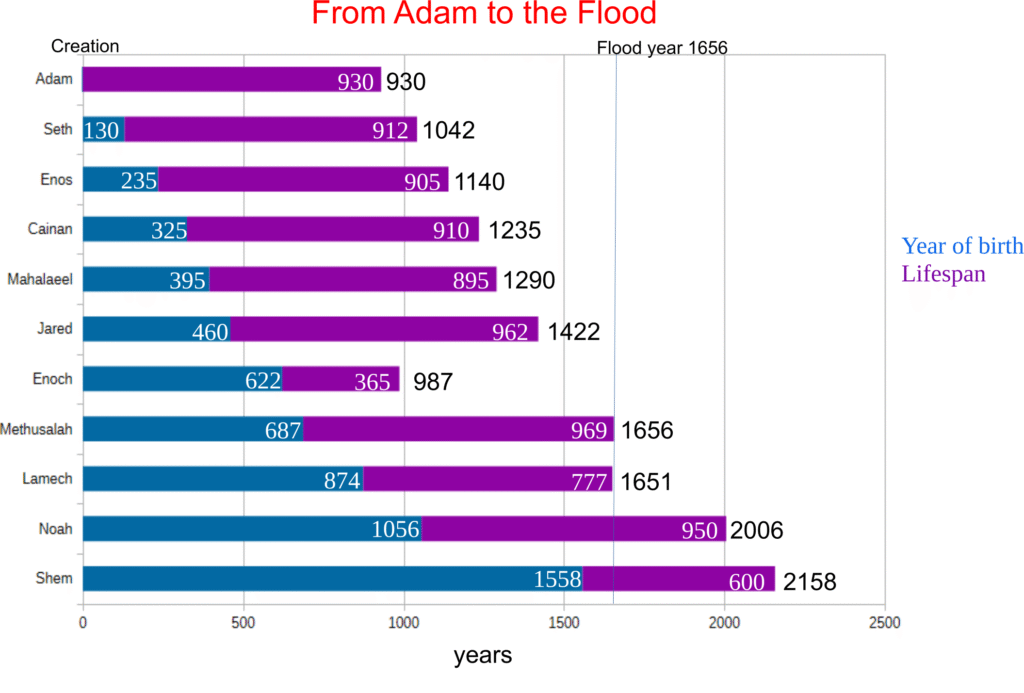
For instance, one debate concerns whether Genesis 5 suggests that the image of God is passed on to subsequent generations, from parents to children. Some would say that it does, in light of the language parallel to Genesis 1 plus the reaffirmation of creation in the image of God to introduce the chapter. In their view, because Adam is in the image of God, anyone created in Adam’s image is also in God’s image. Others do not see this implication. But in either case, there is no affirmation in Genesis 5 that God’s image does not continue in humanity or is somehow damaged. Since its continuation is explicitly affirmed only four chapters later, as we shall see below, it would appear mistaken to attempt to read into Genesis 5 the view that the image of God does not continue.Genesis 9 contains the clearest statement in the OT regarding the image of God after the Fall. According to verse 6, people are to act (or not act) in certain ways, the reason being: “for in his own image God made humankind.” The Imago Dei Revisited – By: Kenneth M. Gardoski https://www.galaxie.com/article/jmat11-2-01 accessed 12 October 2025 12:15
Gen. 9:6 Whoso sheddeth man’s blood, by man shall his blood be shed: for in the image of God made he man.
This idea is supported in the New Testament:
James 3:9 Therewith bless we God, even the Father; and therewith curse we men, which are made after the similitude of God.
Acts 17:28 For in him we live, and move, and have our being; as certain also of your own poets have said, For we are also his offspring.
In Acts 17:28, Paul quotes a line from the poem Phaenomena by the Greek poet Aratus “we are indeed his offspring,” Paul, in his discourse with the Athenians, used this line written by a pagan to argue that humanity’s origin is from the one true God, not from idols. The original poem discusses constellations and the natural world, describing humanity as being descended from Zeus. He uses it to support his argument that the “unknown God” they worship is the Creator and Sustainer of all things.
4 And the days of Adam after he had begotten Seth were eight hundred years: and he begat sons and daughters:
5 And all the days that Adam lived were nine hundred and thirty years: and he died.
6 And Seth lived a hundred and five years, and begat Enos:
7 And Seth lived after he begat Enos eight hundred and seven years, and begat sons and daughters:
8 And all the days of Seth were nine hundred and twelve years: and he died.
9 And Enos lived ninety years, and begat Cainan:
10 And Enos lived after he begat Cainan eight hundred and fifteen years, and begat sons and daughters:
11 And all the days of Enos were nine hundred and five years: and he died.
12 And Cainan lived seventy years, and begat Mahalaleel:
13 And Cainan lived after he begat Mahalaleel eight hundred and forty years, and begat sons and daughters:
14 And all the days of Cainan were nine hundred and ten years: and he died.
15 And Mahalaleel lived sixty and five years, and begat Jared (descend, go down, bring down):
16 And Mahalaleel lived after he begat Jared eight hundred and thirty years, and begat sons and daughters:
17 And all the days of Mahalaleel were eight hundred ninety and five years: and he died.
God Takes Up Enoch
18 And Jared lived a hundred sixty and two years, and he begat Enoch (initiate, narrow, discipline, dedicate, train up):
19 And Jared lived after he begat Enoch eight hundred years, and begat sons and daughters:
20 And all the days of Jared were nine hundred sixty and two years: and he died.
21 And Enoch lived sixty and five years, and begat Methuselah:
22 And Enoch walked with God after he begat Methuselah three hundred years, and begat sons and daughters:
23 And all the days of Enoch were three hundred sixty and five years:
24 And Enoch walked with God: and he [was] not; for God took him.
In contrast to the other pre-flood patriachs, Enoch lived a ‘short’ life.
Matthew 24:22 And unless those days should be shortened, no flesh would be saved. But for the elect’s sake, those days shall be shortened.
Mark 13:20 And unless the Lord had shortened those days, no flesh would be saved. But for the elect’s sake, whom He has chosen, He has shortened the days.
Thomas Ice has this to say in an article available here:
The Greek word for “cut short” has the core meaning “to cut off,” or, when applied to time “to cut short.” Renald Showers, in his book: Maranatha: Our Lord, Come! A Definitive Study of the Rapture of the Church (Bellmawr, NJ: The Friends of Israel Gospel Ministry, Inc., 1995), p. 51. tells us that “a number of scholars have concluded that since the two verbs in Mark 13:20 are in that form, they are expressing action in the past and therefore have significant bearing on the meaning of Jesus’ statement.” What is that bearing? It is that the “aorist tenses are prophetic pasts: God has already decided about the future,” as one scholar explains.(W. D. Davies and Dale C. Allison, Jr., A Critical and Exegetical Commentary on The Gospel According to Saint Matthew, 3 vols. (Edinburgh: T & T Clark, 1997), vol. 3, p. 351). Another says, “The future tense interprets the preceding ‘had been shortened’ as having a future reference (like the Hebrew ‘prophetic perfect’).” (Robert H. Gundry, Matthew: A Commentary on His Handbook for a Mixed Church under Persecution, second edition, (Grand Rapids: Eerdmans, 1994), p. 484.) This means that the cutting short, spoken of by our Lord in both Matthew and Mark, is some thing that has already taken place in the past when God’s plan for history was put forth before the creation of the world. “The aorist tenses put this action in the past,” concludes Ezra Gould. “The language is proleptic, stating the event as it already existed in the Divine decree.” (Ezra P. Gould, A Critical and Exegetical Commentary on The Gospel According to St. Mark, (Edinburgh: T & T Clark, 1896), pp. 247-48.)
In Short: Jesus was teaching that God in the past had already shortened the Great Tribulation. He did so in the sense that in the past He determined to cut it off at a specific time rather than let it continue indefinitely. In His omniscience, God knew that if the Great Tribulation were to continue indefinitely, all flesh would perish from the earth. To prevent that from happening, in the past God sovereignly set a specific time for the Great Tribulation to end.
I know the verses in Matthew and Mark refer to end times but it was a decision taken by God at the time of creation. Coupled with the life and translation of Enoch it all confirms God’s desire to have His elect with Him.
But what a testimony he left. Walking with God means that Enoch lived in close, intimate fellowship with God and was then taken by God to be with Him, rather than dying and being buried. This is often interpreted as being “translated” or taken to heaven alive in both Jewish and Christian traditions. The phrase “walked with God” describes a life of faith, loyalty, and consistent communion with the Creator. This verse emphasizes a deep and consistent fellowship, not just a formal religious one. His life and testimony are also found in the chapter of faith Hebrews 11. While living a life of deep devotion, Enoch was also a man with a family, having many sons and daughters.
Hebrews 11:5 By faith Enoch was translated so as not to see death, and he was not found, because God had translated him; for before his translation he had this testimony, that he pleased God.
Jude 1:14 And Enoch, the seventh from Adam, also prophesied to these, saying, Behold, the Lord came with myriads of His saints,
What does Methuselah’s name mean?
Keep in mind that ancient Biblical Hebrew consists of consonants only, no vowels and no marks (diacritics) indicating the vowel sound. So the vowels have to be deduced or guessed. And this particular name is very old—prediluvian. We do not know what original language was used in his time; the multiplication of languages occured after the Flood, at the Tower of Babel.
The exact meaning of Methuselah’s very ancient name is not certain. Tradionally it means, ‘man of the spear’. Bible scholar and scientist Dr. Henry Morris said it may mean, “When he dies, judgment”—referring to the worldwide flood judgment. Similarly, Cornwall and Smith say his name means, “When he is dead, it shall be sent” (“it” referring to the Deluge) (Cornwall and Smith, Exhaustive Dictionary of Bible Names).
The facts around his life, plus the possible meaning of Methuselah suggests that Methuselah’s very godly father, Enoch, received a prophecy from God when his son was born, thus the name.
The 17th-century midrashic Sefer haYashar (“Book of Jasher”) describes Methuselah with his grandson Noah attempting to persuade the people of the earth to return to godliness. All other very long-lived people died, and Methuselah was the only one of this class left.God planned to bring the flood after all the men who walked in the ways of the Lord had died (besides Noah and his family). Methuselah lived until the ark was built but died before the flood, since God had promised he would not be killed with the unrighteous
Methuselah’s great age may be further evidence of God’ “long-suffering… in the days of Noah” (1 Peter 3:20; 2 Peter 3:9).
Methuselah died in the year of the flood.
From Methuselah to Noah
25 And Methuselah lived a hundred eighty and seven years, and begat Lamech:
26 And Methuselah lived after he begat Lamech seven hundred eighty and two years, and begat sons and daughters:
27 And all the days of Methuselah were nine hundred sixty and nine years: and he died.
28 And Lamech lived a hundred eighty and two years, and begat a son:
29 And he called his name Noah, saying, This [same] shall comfort us concerning our work and toil of our hands, because of the ground which the LORD hath cursed.
30 And Lamech lived after he begat Noah five hundred ninety and five years, and begat sons and daughters:
31 And all the days of Lamech were seven hundred seventy and seven years: and he died.
Lamech died five years before the flood. In the Bible, the number seven primarily symbolizes completion and perfection, originating from the seven days of creation. This is seen in its use to denote the end of God’s work, a complete week, and spiritual fulfillment. The number is also associated with divine judgment, spiritual rest, and important symbolic events throughout scripture, such as the seven-day period for the fall of Jericho or the seven years of abundance before a famine.
The number 7 symbolizes completion and perfection
Creation:
God created the world in six days and rested on the seventh, making the seventh day holy and symbolizing a complete work.
Divine cycle:
The seven-day week is built on this cycle of work and rest, with the seventh day, the Sabbath, set apart as a day of completion and rest.
Spiritual perfection:
The number is used in contexts of spiritual fulfillment, such as Jesus’ seven statements on the cross or the forgiveness Jesus teaches should be unlimited, which he represents as “seventy-seven times.
32 And Noah was five hundred years old: and Noah begat Shem, Ham, and Japheth.
In Hebrew, Noah (נֹחַ, Nōaḥ) means “rest” or “comfort”. The name is derived from the Hebrew word nuach (נוּחַ), which means “rest,” and from the related word nacham (נחם), which means “to comfort” or “compassion”. According to the Book of Genesis, Noah’s father, Lamech, named him with the hope that his son would bring comfort from their hard work.